

Dried Flower Bouquet: How to Choose, Order, and Care for Long-Lasting Flowers in Singapore
by Summers & Winters on Sep 15, 2026

A dried flower bouquet is an arrangement made from flowers, grasses, seed heads, foliage, or decorative stems whose moisture has been removed so the materials hold their shape without a vase of water. It is not the same as a fresh bouquet left to dry accidentally, and it is not automatically the same as a preserved bouquet: drying relies mainly on moisture removal, while preservation may use other treatments to retain flexibility or colour. For a birthday, anniversary, condolence gesture, bridal keepsake, or office display in Singapore, that distinction affects appearance, handling, lifespan, and the message the flowers convey.
Table of Contents
- What a Dried Flower Bouquet actually is
- Why choose one for a Singapore gift or display?
- How drying, arranging, and delivery affect the result
- Where a Dried Flower Bouquet breaks down
- How florists and customers apply the format well
What a Dried Flower Bouquet actually is
The finished arrangement is the result of two separate decisions: how the plant material was stabilised and how the stems were composed. Drying changes a living stem into a decorative material. It usually reduces weight, makes petals and leaves more brittle, and shifts colour towards muted, earthy, or deliberately tinted tones. A florist then combines those stems into a design with a particular silhouette, balance, and occasion in mind.
Flowers can be dried in several ways. Air-drying is suited to many grasses, seed heads, statice, strawflower, eucalyptus, and robust flowers. Pressing produces a flat material for frames, cards, and resin work rather than a rounded bouquet. Desiccants can help retain the shape of some flowers by drawing out moisture around the bloom. Commercial florists may also use materials that are dyed, bleached, tinted, or otherwise finished after drying. The resulting product should be described honestly: a natural dried arrangement can include both naturally dried stems and colour-enhanced components.
University horticulture guidance describes preservation as a process where flowers are harvested at an appropriate stage and then dried using a method matched to the plant. The choice matters because thick, water-rich flowers behave differently from papery blooms and airy grasses. See the University of Minnesota Extension guide to growing and preserving flowers and Michigan State University Extension’s guidance on drying flowers for the underlying horticultural principles.
Dried, preserved, faux, and soap flowers
These categories overlap in shopping language, but they solve different jobs:
- Dried flowers are real plant materials that have had their moisture removed. Their texture is natural, crisp, papery, woody, or seed-like.
- Preserved flowers are real flowers or foliage treated to retain a softer appearance or more stable colour. The process varies by material and supplier, so “preserved” should not be treated as a single technical method.
- Faux flowers are manufactured replicas. They can be practical for permanent displays, but they do not have the irregular texture or botanical variation of a dried stem.
- Soap flowers are decorative pieces made from soap or soap-like material. They are chosen for their presentation and gifting novelty, not for the same botanical character as dried flowers.
That distinction is useful when the recipient has a clear expectation. Someone decorating a new home may want a sculptural, low-maintenance arrangement. A bride may want a keepsake that retains a meaningful shape. A friend sending condolences may prefer a restrained, natural design rather than bright dyed stems. Ask for the product category before ordering if the wording on a listing is not specific.
What makes a bouquet look intentional
A dried arrangement is not simply a fresh bouquet with the water removed. Florists select materials for line, mass, texture, and negative space. Tall grasses can establish height; rounded seed heads can provide rhythm; broad foliage can anchor the base; small filler flowers can soften gaps. The stem condition also matters: a brittle, over-dried flower may shed when moved, while a stem with residual moisture may warp or deteriorate in storage.
Colour is another design decision. Natural beige, cream, tan, rust, and muted green create a calm interior look. Whitewashed or pastel materials suit a soft bridal palette. Stronger terracotta, burgundy, mustard, or blue accents can make a birthday or congratulations arrangement feel more celebratory. Colour-enhanced stems should be handled carefully because tint can transfer to adjacent materials or surfaces, particularly in humid conditions.
Why choose one for a Singapore gift or display?
The main value is not an unlimited lifespan. It is longer display without vase water and the ability to keep a meaningful arrangement after the event. That changes the practical use case: the recipient can place it on a shelf, reception counter, bedside table, or office cabinet without arranging a daily water routine.
For a sender, the format can also solve a communication problem. Fresh flowers are strongly associated with immediacy and celebration. Dried flowers communicate something more enduring, reflective, or decorative. That does not make them automatically better for every occasion. A graduation gift may benefit from cheerful colour and a compact shape; a condolence design may need restraint; a romantic arrangement may need warmth and softness rather than an overly rustic appearance.
Match the format to the recipient’s job
- Birthday or anniversary: choose a palette that reflects the recipient’s room and personality, not only the sender’s favourite colour. A smaller arrangement may be easier to place beside existing décor.
- Congratulations or graduation: use a clearly shaped design with a lively accent colour. If a card or gift accompanies it, keep the bouquet compact enough to carry and display.
- Condolence: prioritise a quiet silhouette, restrained colour, and a message that does not require maintenance from a grieving household. For a larger venue or wake, ask whether a stand or a table arrangement is more appropriate.
- Corporate gift: select a neutral, polished design that works in an office and does not depend on knowing the recipient’s home style.
- Bridal keepsake: decide whether the priority is matching the wedding palette, preserving a symbolic flower, or creating a bouquet that can be displayed after the ceremony.
- Seasonal gifting: adapt texture and colour to the occasion. A soft pastel design may suit a spring-like celebration, while warm neutrals can feel appropriate for year-end décor.
For Singapore recipients, delivery context is part of the choice. A bouquet going to a private home may be placed in a living room, while one sent to an office may need a stable base and a size that does not obstruct a desk. A sympathy arrangement may go to a venue with limited surface space. Confirm the delivery address, recipient availability, and preferred placement before selecting an elaborate shape.
Dried materials are also useful for customers who want a reusable decorative object rather than a one-week display. That is a benefit, not a guarantee. “Long-lasting” means condition-dependent: sunlight, humidity, dust, handling, pests, and the fragility of the selected stems all influence how well the arrangement remains presentable.
A worked selection example
Imagine an illustrative order for a colleague moving into a new office. The sender wants something decorative, does not know the colleague’s home colour scheme, and needs the arrangement to sit on a reception counter. A sensible starting policy would be a medium-height neutral design with cream, tan, and green materials, a stable container, and no loose glitter or strongly scented additions. The decision is not “dried flowers are better”; it is “this construction creates the least friction for this recipient and location.”
| Need | Design response | Trade-off |
|---|---|---|
| Low maintenance | No water, stable base, clear care note | Some stems may be more brittle than fresh flowers |
| Professional setting | Muted palette and controlled height | Less dramatic than a large celebration bouquet |
| Uncertain décor | Neutral natural tones | May feel less personal than a bold custom colour |
| Easy placement | Compact footprint and protected transport | Fewer long, sweeping stems |
How drying, arranging, and delivery affect the result
The quality of a dried bouquet begins before the florist ties it. Harvest stage controls shape and texture. A flower opened too far may lose petals during drying; one cut too early may never develop the intended form. Moisture content, stem thickness, airflow, temperature, and the chosen drying medium all influence the outcome. The Royal Horticultural Society discusses dried flowers as a design material and explains that suitable plant selection is central to getting a good result; its guide is available at RHS: Dried flowers.
From raw stems to a finished bouquet
- Selection: choose stems that fit the intended height, colour family, texture, and occasion. Inspect for mould, crushed heads, excessive shedding, and weak attachment points.
- Conditioning: remove unsuitable leaves and damaged sections. Separate materials that need different drying treatment rather than forcing everything into one bundle.
- Drying or preservation: use a method suited to each material. Dense heads and delicate petals may need different handling times and support.
- Sorting: group stems by length, stiffness, visual weight, and colour. This prevents one heavy head from pulling the design off balance.
- Construction: establish the focal area, add supporting lines and textures, then secure the stems. The binding must hold firmly without crushing fragile material.
- Finishing: trim the base, check the silhouette from multiple angles, and remove loose debris. If the bouquet is placed in a vessel, the opening must support the weight.
- Delivery preparation: protect the arrangement from crushing and unnecessary movement. A bouquet that looks perfect in the studio can arrive damaged if the packaging lets long stems swing against the box.
Construction changes the customer experience. A hand-tied bouquet can be placed in a vase later, but it may need careful support because dried stems are less forgiving than fresh ones. A flower box or basket can provide a stable presentation and reduce the need for the recipient to rearrange anything. A wall-mounted or hanging design may suit a narrow room but requires a safe fixing point. For a large corporate or condolence presentation, the practical requirement may be a formal flower stands display rather than a small personal bouquet.
Why humid conditions need a different care plan
Drying removes water from the plant, but the material remains responsive to its environment. Humid air can make some stems feel softer, encourage warping, or contribute to deterioration if the bouquet was not adequately dried. Direct heat and strong sunlight can accelerate fading and make fragile petals crack. Air movement is helpful for a room, but a fan aimed continuously at the bouquet can dislodge delicate pieces.
A practical handover note should therefore explain the main variables rather than promise a fixed number of months or years. For a Singapore home or office, recommend a dry indoor location away from windows with intense sun, bathrooms, kitchen steam, air-conditioning discharge, and frequent handling. The bouquet should not be watered, misted, or placed in a damp vase. If the arrangement includes dyed materials, keep it away from pale painted walls and fabric until the recipient is satisfied that no colour transfer occurs.
- Place the bouquet on a stable surface where it will not be knocked by bags, doors, or pets.
- Keep it away from prolonged direct sunlight, even if the room otherwise feels cool.
- Do not spray perfume, hairspray, water, or cleaning products onto the stems.
- Remove dust with a gentle, low-airflow method rather than rubbing the petals.
- Inspect occasionally for unusual dampness, musty odour, webbing, or loose debris.
Where a Dried Flower Bouquet breaks down
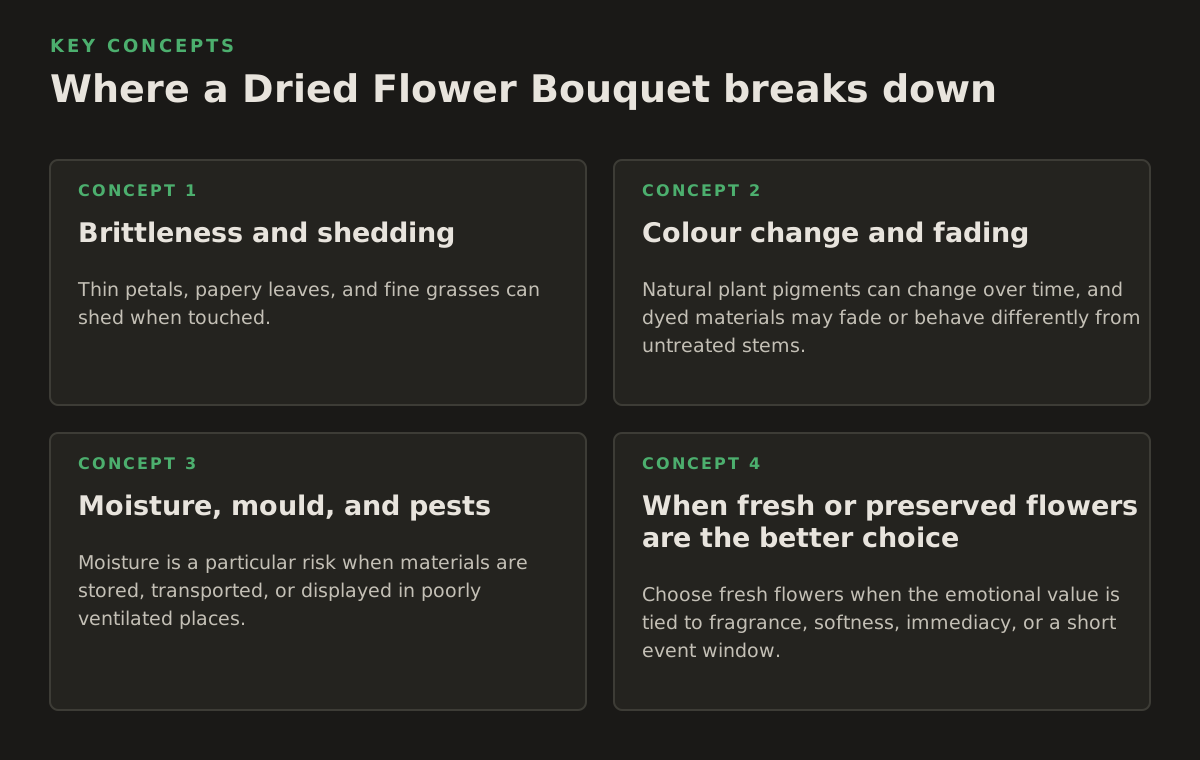
The honest limitations matter as much as the appeal. Dried flowers are durable, not indestructible. Their weak points are usually brittleness, environmental exposure, transport, and mismatch between the design and the recipient’s circumstances.
Brittleness and shedding
Thin petals, papery leaves, and fine grasses can shed when touched. A bouquet intended for a busy reception desk may not be suitable if staff will move it repeatedly. A household with young children or pets may need a compact, secured design rather than a tall arrangement with projecting stems. If the recipient expects the softness and scent of fresh flowers, the texture may also be surprising.
Colour change and fading
Natural plant pigments can change over time, and dyed materials may fade or behave differently from untreated stems. A design that depends on an exact shade for a wedding should be approved against a physical sample or a clear current photograph where possible. Screens can misrepresent colour, and natural variation means two stems of the same variety may not be identical.
Moisture, mould, and pests
Moisture is a particular risk when materials are stored, transported, or displayed in poorly ventilated places. A bouquet should not be sealed in a damp environment after delivery. If the recipient notices a persistent musty smell, visible mould, or insect activity, isolate the arrangement from other plant materials and ask the florist for handling guidance. Do not attempt to disguise the problem with fragrance or water.
These are not reasons to reject the format. They are reasons to choose the design around the room. Before ordering, consider:
- Will the bouquet be in direct sun for several hours each day?
- Will it be moved between an air-conditioned office and a humid outdoor area?
- Does the recipient have pets or children that could pull at loose stems?
- Is the arrangement a keepsake, a temporary event display, or a permanent décor item?
- Does the recipient prefer natural irregularity or a uniform, polished appearance?
There is also an ethical and practical limit to the word “maintenance-free.” The bouquet does not need water, but it still needs an appropriate location and occasional dust control. If the recipient wants absolutely consistent colour and shape for a high-traffic commercial display, a faux arrangement may be more suitable. If the recipient wants botanical texture and a natural story, dried material is the better compromise.
When fresh or preserved flowers are the better choice
Choose fresh flowers when the emotional value is tied to fragrance, softness, immediacy, or a short event window. Choose preserved flowers when the design needs a softer appearance or a particular form that ordinary drying may not retain. Choose faux flowers when repeated handling, outdoor exposure, or strict visual uniformity outweighs botanical authenticity. The correct choice depends on the job, not on the assumption that the longest-lasting product is always the most thoughtful.
How florists and customers apply the format well
The strongest orders begin with a brief that gives the florist constraints to solve. “Make it nice” leaves too many decisions hidden. A useful brief states the occasion, recipient, delivery setting, preferred colours, disliked materials, approximate scale, and whether natural variation is welcome.
Build a practical order brief
- Occasion: birthday, anniversary, sympathy, grand opening, bridal, seasonal, or décor.
- Recipient: individual, family, couple, office team, venue, or business owner.
- Placement: desk, shelf, dining table, reception counter, bedroom, event table, or display stand.
- Style: natural, rustic, modern, romantic, minimalist, soft, colourful, or formal.
- Colour: preferred tones, colours to avoid, and whether exact matching is necessary.
- Practical limits: pets, children, allergies or sensitivities, fragile surfaces, limited space, or frequent relocation.
- Message: personal note, company greeting, wedding symbolism, or condolence wording.
For a custom arrangement, separate non-negotiables from preferences. “Must fit a 25-centimetre-wide shelf” is a measurable constraint. “Prefer warm neutrals” leaves room for the florist to substitute a suitable stem when a particular material is unavailable or seasonally inconsistent. Any dimensions used here are an illustrative starting policy, not a universal bouquet standard; the actual size should be agreed with the florist and the delivery setting.
Illustrative decisions for common Singapore orders
- Birthday gift: request a compact dried design with one cheerful accent colour and a message card. This keeps the bouquet personal without requiring a large display area.
- Anniversary: ask for a warmer palette and a more sculptural silhouette. Add a preserved feature only if the recipient values a softer, less brittle finish.
- Condolence: choose restrained colours and a stable presentation. If the family or venue requires a formal display, ask about flower stands rather than sending a personal hand-tied bouquet.
- Grand opening: prioritise visibility, a secure base, and clear placement instructions. A dried display may work as a secondary décor piece, while a larger stand may communicate the occasion more formally.
- Bridal bouquet: approve the colour story and intended handle before production. If it will be kept after the ceremony, ask how it should be transported and displayed.
- Corporate seasonal gift: use an office-friendly palette and consistent presentation across recipients, while accepting that natural stems will vary slightly.
Customers shopping more broadly may begin with flower bouquets and then decide whether a fresh, dried, preserved, or mixed-material arrangement fits the occasion. That sequence is useful because it starts with the message and placement, then selects the material, instead of treating the material as the message.
Care instructions that should accompany delivery
A good handover is brief enough to follow and specific enough to prevent avoidable damage. Include the display location, dusting method, moisture warning, and what to do if a stem loosens. Do not promise a fixed lifespan without knowing the materials and environment. Instead, explain that appearance will change gradually and that the bouquet should be relocated if it becomes exposed to strong sun or damp air.
For an illustrative care card, use wording such as:
Keep indoors in a dry place away from direct sunlight, steam, and water. Handle by the tied section or container, not by the flower heads. Dust gently and avoid spraying products onto the arrangement. Natural colour and texture may change over time; contact the florist if you notice unusual moisture, mould, or insect activity.
The final recommendation is to choose a dried flower bouquet when the recipient will value a tactile, low-water display and can give it a stable indoor location. For Singapore birthdays, bridal keepsakes, corporate gifts, seasonal décor, and sympathy arrangements, Summer's Winter Florist can help match the format to the occasion through its range of fresh, preserved, dried, soap, faux, bridal, customised, and event florals at Summer's Winter Florist.
Authored with NotFair SEO


