

Flower Arrangements: How to Choose the Right Style for Every Occasion
by Summers & Winters on Sep 16, 2026

Flower arrangements are designed groupings of flowers, foliage, supporting materials, and containers assembled for a particular message, setting, and lifespan. They include more than a hand-tied bouquet: a compact flower box, a vase display, a wedding table piece, a condolence stand, a preserved-flower gift, and a large grand-opening installation all belong to the same broad category.
Table of Contents
- What Flower Arrangements include—and what the format changes
- Why the occasion and setting matter more than a flower list
- How a florist turns a request into a workable design
- Where Flower Arrangements break down
- How practitioners apply the choices in real orders
That distinction matters when ordering in Singapore. A birthday recipient may want something easy to carry home, while a family sending condolences may need a visible stand delivered to a wake. A couple planning a wedding needs flowers that work with clothing, photographs, ceremony logistics, and reception tables. A business may need a display that can arrive at a venue, remain presentable during an event, and carry a message clearly. The best choice is therefore not simply the arrangement with the most flowers. It is the format that performs the job without creating avoidable problems.
What Flower Arrangements include—and what the format changes
Florists usually make three connected decisions: what materials to use, how to compose them, and how to support the design. Materials may include fresh flowers, dried stems, preserved blooms, soap flowers, faux flowers, foliage, branches, ribbons, paper, floral foam, wire, or a container. Composition covers colour, line, height, density, rhythm, and focal points. Support determines whether the result is carried, placed on a table, displayed on a stand, or installed in a larger space.
Common formats and their practical jobs
- Hand-tied bouquets: Stems are gathered and wrapped so the recipient can carry the design or place it in a vase. They suit birthdays, anniversaries, romantic gestures, congratulations, and personal gifting.
- Flower boxes: Flowers are arranged inside a presentation box, often with a compact, polished silhouette. They are useful when presentation matters and the recipient may prefer not to find a vase immediately.
- Vase arrangements: Flowers are cut and positioned in a container intended to remain on a table, counter, reception desk, or dining surface. They suit home décor and corporate gifting but require format-specific care.
- Flower stands: A larger, freestanding display communicates public congratulations, sympathy, support, or respect. They are suited to venues, offices, openings, and wakes rather than intimate bedside gifting. See the range of flower stands when the message needs to be seen by visitors.
- Bridal and event flowers: Bouquets, boutonnieres, corsages, arches, aisle pieces, table arrangements, and reception installations are coordinated as a visual system rather than purchased as isolated gifts.
- Long-lasting designs: Preserved, dried, soap, and faux flowers can be selected when the recipient wants a keepsake, low-maintenance décor, or a display that does not depend on fresh-stem care.
The container is not a minor finishing detail. A low box creates a different visual and handling experience from a tall vase. A stand changes the viewing distance and the need for a message board. A bridal bouquet must be comfortable to hold and photograph, while an arrangement for a reception table must allow guests to see across or around it. Format controls function before colour and flower variety enter the discussion.
There is also a difference between a design made for immediate presentation and one made for transport. A tightly packed box may protect delicate flowers during delivery, whereas an airy installation may require a venue setup or a larger vehicle. Tell the florist whether the arrangement is being collected, delivered to a home, sent to a hotel, taken to a church, or installed at an event. That information affects construction and packaging.
Why the occasion and setting matter more than a flower list
People often begin with a favourite flower or colour. That is useful, but it is rarely enough to choose a successful arrangement. The recipient’s relationship to the sender, the tone of the occasion, and the display location all influence the design.
Read the social message first
A romantic arrangement can be expressive and personal, but a congratulatory gift may need brighter, more celebratory energy. Sympathy flowers should communicate care without making the family manage an impractical object. Corporate flowers need to respect the company’s setting and message without looking like a personal romantic gift. For a seasonal occasion such as Mother’s Day, Christmas, graduation, or Teacher’s Day, the design may need to feel recognisably celebratory while remaining appropriate for the recipient.
- Birthday: Choose a format that suits the recipient’s home, desk, or lifestyle. A compact box may be easier for someone with limited space; a bouquet may feel more generous when the recipient enjoys arranging flowers themselves.
- Anniversary or romantic gift: Prioritise colour symbolism, personal preferences, and presentation. Include the relationship context in the message so the florist can avoid a generic corporate look.
- Congratulations: Bright flowers, a substantial presentation, or a public stand may suit a promotion, new business, graduation, or grand opening. The venue and recipient’s role determine the appropriate scale.
- Condolences: Ask where the flowers are going and whether a stand, wreath, or more compact arrangement is customary for the service. Confirm the family name, venue name, delivery window, and wording carefully.
- Wedding: Coordinate the bridal bouquet, personal flowers, ceremony pieces, and reception designs around the dress, venue, palette, photography, and movement through the day.
- Seasonal gifting: Seasonal collections can provide a timely look, but check whether the recipient prefers fresh flowers, keepsakes, or low-maintenance décor before selecting the material.
Scale is a relationship between the flowers and the room
Scale is not the same as price or flower count. It describes how the arrangement relates to the space around it. A small design can look intentional on a bedside table but disappear on a large reception counter. A dramatic stand can suit a lobby yet overwhelm a small flat. The florist needs the destination, available surface, viewing direction, and whether people must walk around the display.
When a customer has no measurements, an illustrative starting example might be to describe a desk arrangement as “compact enough to leave most of the working surface usable,” rather than requesting a universal size. If exact dimensions matter, send the florist the table width, doorway restrictions, lift access, and a photograph of the location. The florist or venue should determine the final dimensions; a sample measurement is not a general rule.
For public displays, viewing distance changes the design. A message on a flower stand must be legible to people approaching from the relevant direction. For a wedding table, guests need sightlines across the centre. For a gift at home, the recipient may inspect it from close range. Describe the viewing condition, not just the desired flower type.
How a florist turns a request into a workable design
A useful order brief translates an emotional intention into production information. “Make it elegant” gives a florist a direction, but not enough constraints to build, pack, and deliver the arrangement reliably. A better brief describes the recipient, occasion, setting, preferred style, restrictions, and acceptable alternatives.
The design brief
- State the occasion and relationship: For example, “a congratulatory gift for a colleague opening a café” is more actionable than “flowers for someone.”
- Name the destination and delivery context: Give the building, unit or venue details, recipient contact, preferred delivery date, and any reception, loading-bay, wake, hotel, or event restrictions.
- Choose the presentation format: Say whether you are considering a bouquet, box, vase arrangement, stand, bridal bouquet, table piece, or long-lasting design.
- Describe the visual direction: Mention preferred colours, a desired mood, and flowers to include or avoid. A reference image can show shape, but it may not be available for exact replication.
- List practical constraints: Include allergies, pets, children, religious or cultural considerations, narrow access, limited table space, no-vase requirements, and whether the recipient can maintain fresh flowers.
- Set substitution expectations: Ask the florist to preserve the overall palette, silhouette, and value if a particular flower is unavailable, rather than insisting on one stem at all costs.
- Confirm the message and recipient details: Check spelling, titles, phone numbers, venue names, and the wording on cards or stand banners before production.
Substitution flexibility protects the design. Fresh flowers vary with season, farm supply, import conditions, weather, and quality on the day of preparation. A florist may replace one variety with another that provides a similar colour, texture, or focal role. A rigid request for an unavailable flower can produce a weaker arrangement or delay. If a specific flower is emotionally essential, identify it as a priority and ask what alternatives are acceptable.
How composition creates a message
Florists use several design mechanisms, even when the customer does not use technical terms. Colour creates the first emotional impression. Repetition makes a mixed arrangement feel coherent. Contrast gives the eye a focal point. Line and height guide attention. Negative space prevents every stem from competing at once. Texture distinguishes soft petals from foliage, berries, grasses, branches, or dried elements.
For example, a congratulatory stand may use stronger colour contrast and a clear vertical structure so it reads in a busy venue. A sympathy arrangement may benefit from calmer colour relationships and a graceful shape that does not compete with the setting. A romantic box may rely on dense, close viewing and a carefully controlled palette. These are not rules that prohibit creativity; they are consequences of how people encounter the design.
Bridal work adds another layer. The bouquet is held close to the body, photographed from multiple angles, and carried while the couple moves. Personal flowers must coordinate with clothing and the wedding party. Ceremony and reception flowers must fit the venue without obstructing guests, signage, food service, or photography. A wedding brief should therefore include the number of people requiring personal flowers, the ceremony and reception locations, setup access, collection or teardown responsibilities, and the desired visual relationship between each piece.
Where Flower Arrangements break down
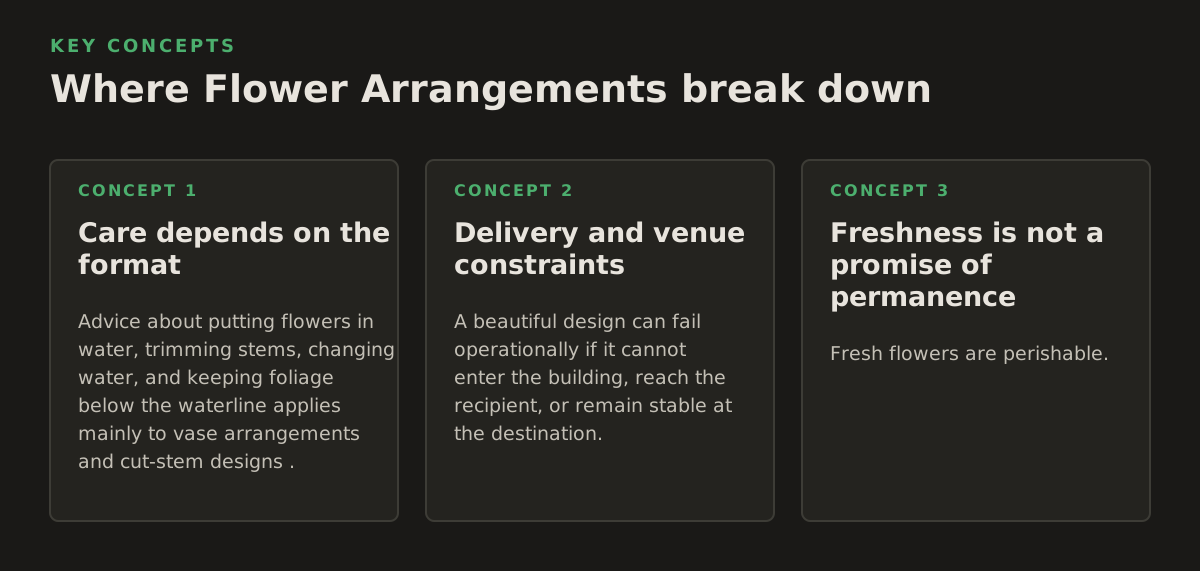
Most disappointing orders are not caused by one wrong flower. They result from a mismatch between the design, the delivery conditions, and the recipient’s expectations. Identifying those failure points early makes the order more resilient.
Care depends on the format
Advice about putting flowers in water, trimming stems, changing water, and keeping foliage below the waterline applies mainly to vase arrangements and cut-stem designs. It does not automatically apply to flower boxes, foam-based arrangements, stands, installations, preserved flowers, dried flowers, soap flowers, or faux flowers. The florist’s instructions for the actual format take priority.
For a vase arrangement, the general principle is to follow the supplied care card, use a suitable clean container if a transfer is required, and keep the display away from damaging heat or direct conditions identified by the florist. The Royal Horticultural Society’s cut-flower guidance discusses practical care such as clean water and suitable placement; see the RHS cut-flower care guidance (accessed 2026). The University of Minnesota Extension also explains that cut flowers have format- and condition-dependent care needs in its cut-flower care guide (accessed 2026).
Do not pour water into a flower box or foam arrangement unless the florist specifically tells you where and how to do it. Excess moisture can damage packaging, furniture, or materials. A stand may be designed for display at the venue rather than home maintenance. Preserved and dried designs generally need different handling from fresh flowers, while soap and faux flowers are decorative products rather than living cut stems. Identify the material before giving care advice.
Delivery and venue constraints
A beautiful design can fail operationally if it cannot enter the building, reach the recipient, or remain stable at the destination. Singapore deliveries may involve condo security desks, office reception, hotel procedures, event loading areas, lifts, stairs, or venue-specific delivery windows. A condolence stand may need the correct wake location and family name. A grand-opening display may need to arrive before guests and be positioned without blocking the entrance.
- Confirm the complete address, unit number, building name, and recipient phone number.
- Ask whether the recipient will be available or whether reception may accept the delivery.
- Share access restrictions, parking limitations, loading instructions, and venue contact details.
- For wakes and events, provide the exact hall, floor, lot, or room rather than only the building address.
- Tell the florist if the design must be carried by hand, placed on a narrow counter, or assembled on site.
- Keep a realistic substitution plan if weather, supply, or transport affects the original flower selection.
Freshness is not a promise of permanence
Fresh flowers are perishable. Their appearance depends on variety, maturity, handling, temperature, hydration, transport, and the conditions after delivery. A fresh arrangement can be the right choice for immediacy and fragrance, but it requires the recipient to follow the care instructions and accept natural change. If the purpose is a lasting memento or desk décor with minimal maintenance, preserved, dried, soap, or faux flowers may better match the job.
Long-lasting does not mean indestructible. Preserved and dried pieces can still be affected by moisture, dust, handling, and unsuitable placement. Soap flowers and faux flowers can be damaged by crushing or heat. Ask what “lasting” means for the intended display: a keepsake on a shelf, a seasonal decoration, a workplace piece, or a reusable event prop. Choose lifespan by use case, not by the label alone.
How practitioners apply the choices in real orders
The following scenarios show how the same customer question—“Which arrangement should I send?”—produces different answers once the job is defined.
A birthday delivery to a small flat
The sender wants a cheerful gift for someone who lives alone and may not own a suitable vase. A flower box can reduce the immediate setup burden, provided the florist explains its care requirements. A compact bouquet can also work if the sender knows the recipient enjoys arranging flowers. The brief should include favourite colours, pet or allergy concerns if known, delivery timing, and whether the recipient will be home.
The important decision is not whether a box or bouquet is universally better. It is whether the recipient values ready-to-display presentation or the activity of arranging stems. For customers who want a carryable, hand-presented gift, browsing flower bouquets gives a more relevant starting point than looking only at individual flower varieties.
A condolence order for a wake
Here, visibility and logistics matter more than intimate styling. The sender should confirm the wake venue, family name, delivery instructions, and message wording. A flower stand may be appropriate when the flowers are intended to express public support and be seen alongside other tributes. A smaller arrangement may be more suitable when the family has limited space or when the sender wants a personal gesture.
Ask about the venue’s acceptance process before ordering. A stand that arrives without the correct location details can be delayed or placed incorrectly. The florist may also need to determine the stand’s construction, message placement, and delivery method based on the venue.
A grand-opening or corporate display
A business sender should separate the brand message from personal preference. Consider the entrance, logo colours, signage, customer traffic, photographs, and whether the display is for one day or a longer event. Strong contrast and an organised silhouette can help the stand read clearly in a busy environment, but the venue should determine safe placement and access.
An illustrative planning example—not a universal size recommendation—would be to tell the florist that the display will be photographed from the doorway and viewed by guests crossing a lobby. That information is more useful than saying “make it impressive.” Add the business name, opening date if relevant, recipient contact, delivery window, and a backup colour direction.
A bridal bouquet and coordinated wedding flowers
Begin with the dress, bouquet handling preference, wedding palette, ceremony location, reception layout, and photography style. A cascading shape, round bouquet, loose garden style, or structured design each behaves differently when carried and photographed. The florist should determine the appropriate size, weight, mechanics, and conditioning for the chosen flowers; there is no universal holding-time or bouquet-dimension rule that fits every wedding.
Use a single visual brief for the bouquet, boutonnieres, corsages, aisle flowers, and table pieces. That does not mean every piece must be identical. It means they share a controlled palette, repeated textures, or a common focal flower. Confirm who receives each personal flower, when the wedding party needs them, where setup occurs, and how the flowers will be transported between venues.
A keepsake for a recipient who travels frequently
Fresh flowers may be unsuitable if the recipient is away often or does not want regular maintenance. Preserved, dried, soap, or faux flowers can provide a different kind of value: a display that can remain in place and recall the occasion. The sender should still describe the intended location and aesthetic. A sunlit window, humid room, office desk, and display cabinet create different practical conditions.
For a seasonal collection, ask whether the design is made from fresh or lasting materials and whether substitutions are expected. This prevents a common misunderstanding in which the customer assumes a seasonal colour story guarantees a particular flower or lifespan.
What to ask before placing the order
- Which format is most suitable for the destination: bouquet, box, vase, stand, installation, or lasting design?
- Will the recipient need to provide a vase, water, trimming, or other fresh-flower care?
- What materials are included, and what substitutions may be made if a flower is unavailable?
- What information does the florist need for delivery to a home, office, hotel, wedding venue, or wake?
- Can the arrangement be adapted for allergies, pets, children, religious customs, or limited space?
- For wedding and event work, who handles setup, venue access, collection, and disposal?
For a Singapore order in 2026, give the florist enough context to make a responsible design decision rather than treating a catalogue image as a binding specification. State the occasion, destination, format, palette, restrictions, message, and delivery requirements. Then allow the florist to resolve flower availability, mechanics, care instructions, and final proportions.
Summer’s Winter Florist offers fresh bouquets, flower boxes, preserved and dried flowers, soap flowers, faux flowers, bridal flowers, seasonal designs, and flower stands across Singapore. For a customised order, you can use the florist’s verified WhatsApp ordering path to share the occasion, setting, preferences, and delivery details before confirming the arrangement.
Authored with NotFair SEO


